
Uncategorized
Why seed phrases are dying — and how smart backup cards plus mobile apps fix what paper never could
Half the people I meet who say they “hold their seed phrase” are lying to themselves. Whoa, seriously, pay attention. They scribble a 12-word list on paper and tuck it away. Or they store it in a password manager and assume that’s sufficient. But the truth is messier: paper degrades, screens get hacked, backups are lost during moves or tombstones of cloud services, and human error eats security for breakfast unless you design something terrible simple and very resilient.
Hmm… my gut says otherwise. Initially I thought a mobile app plus an encrypted cloud backup could solve this problem. Actually, wait—let me rephrase that: mobile apps are part of the answer, not the whole thing. On one hand a polished app gives UX, frictionless signing and biometric lock; on the other hand, relying wholly on software recreates the very single-point-of-failure that seed phrases were supposed to prevent, so you must design for hardware-backed custody. My instinct said ‘hardware or nothing’ but then I saw hybrid approaches that felt smarter.
Why seedless smart cards matter
Seriously? That’s what surprised me. Smart cards like the Tangem-style products aren’t perfect, yet they change the risk model. I recommend trying a tangem wallet if you want a seedless smart-card experience that simply taps to sign transactions and stores private keys securely. They embed the private key inside a tamper-proof chip, remove the need to memorize and manage a fragile seed phrase, and enable straightforward recovery workflows using backup cards or paired devices, which is huge for everyday users who fear losing funds. That shift from “write this down” to “use a physical key” changes behavior.
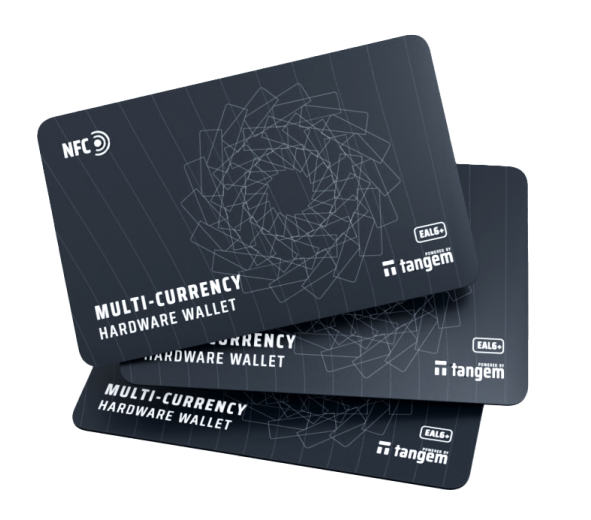
Whoa, that’s neat. But there are trade-offs you shouldn’t gloss over. Backup cards — small, smart NFC cards that mirror keys or provide recovery codes — feel very familiar to people accustomed to plastic cards. They can be stored in a safe deposit box, a wallet, or handed to a trusted friend for safekeeping, and because they aren’t readable without the card’s chip they avoid many of the accidental-exposure vectors that paper suffers from, though physical theft remains possible. If you lose a backup card, you still have the app pair or another backup card, assuming you followed a sane redundancy plan.
Something felt off about that. On deeper thought I realized users mix approaches and then make errors. For example one person I worked with stored a backup card in a shoebox at their mom’s house and forgot to inform her. That sounds hilarious until you imagine the birthday party when the shoebox gets tossed, or the estate sale, or the niece who thinks a shiny card is cool and turns it into a lanyard accessory — the human element is messy. Designing a recovery flow that is frictionless but also privacy-preserving and loss-resistant is hard.
I’ll be honest—I’m biased. I prefer systems that combine a secure hardware element, a user-friendly mobile app, and a clear backup strategy that doesn’t rely solely on human memory, and that’s very very important. A plausible pattern is: primary smart card in your wallet, mobile app as day-to-day signer, and one or two backup cards locked away separately. Initially I thought a single backup card was enough, but then I realized geographic redundancy matters—store backups in different locations, preferably of different risk profiles (a safe deposit box vs. a trusted relative’s residence), so they don’t all succumb to the same hurricane or house fire. This is somethin’ I tell friends all the time: plan redundancy deliberately, test recovery, and don’t outsource responsibility entirely to unnamed services.
Wow, this actually works. Practical steps: buy a certified smart card product, register cards in the app, make at least two backups, and label them clearly. Test recoveries in a safe environment and document who knows what. On balance, replacing fragile 12- or 24-word lists with hardware-backed keys plus backup cards and a good mobile interface reduces cognitive load and improves security for most everyday users—especially those who don’t want to be crypto engineers. If you care about making crypto accessible and safe, rethink the seed phrase ritual and try practical alternatives that match how people actually live.
FAQ
Can backup cards fully replace seed phrases?
Short answer: for many users, yes — when backed by a secure mobile app and at least one other geographically-separated backup. Long answer: recovery models vary by vendor, so verify tamper resistance, documented recovery flow, and whether the card supports multi-backup setups before you trust it with significant funds.
What if I lose both my card and my phone?
Recoverability depends on how many backups you made and where you stored them. Ideally you have two backup cards in different locations or a single backup plus a custodial emergency plan with someone you trust. Test the process — don’t just assume it works.